
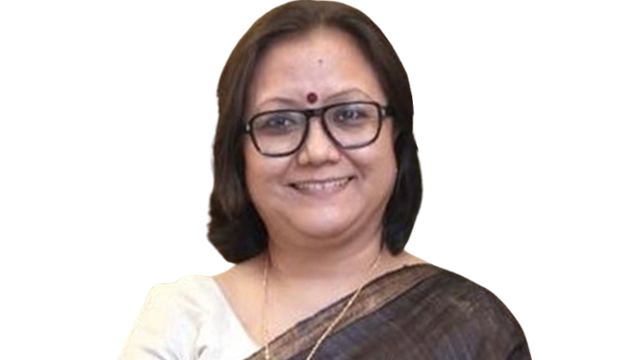
Intro: India’s education system looks stable on paper, but beneath the surface, silent shifts are redrawing its future. Senior Journalist Mahima Sharma highlights the data gaps, digital divides, falling enrolments and rising private trust are converging fast. What’s really changing? Why does it matter now? All this and more may redefine how the country learns in the next decade - asserts Dr. Suman Negi, Assistant Professor, Department of Educational Planning at the National Institute of Educational Planning and Administration (NIEPA). She is our Socio-economic Voice of the week at Indiastat, read the exclusive conversation with her.
MS: In your experience and expertise, how can educational planning at state and district levels better incorporate data on migration, labour markets and local socio-economic trends to design responsive schooling systems?
Dr. Negi: Educational planning is fundamentally established upon the availability of a robust database. In alignment with this requirement, the Government of India (GoI) has institutionalised a sophisticated mechanism for data collection and dissemination, characterised by a rapid digital transformation and technological convergence. Central to this architecture is the Unified District Information System for Education Plus (UDISE+), managed by the Ministry of Education (MoE). As one of the world's most expansive educational management information systems (EMIS), UDISE+ facilitates the annual collection of comprehensive data from close to 1.47 million schools in India. The primary objective of this database is to enhance the overall schooling system by ensuring institutions are responsive to shifting demographic, social and technological trends.
It must also be noted that in India’s decentralised planning framework, the school serves as the primary unit for collection and the district serves as the unit for data dissemination and preparation of District School Education Plans collection.
Beyond UDISE+ database, state governments gather supplementary data on various socio-economic attributes that capture data on migrants and other household variables to prepare annual work plans and budgets under the centrally sponsored scheme Samagra Shiksha. The integration of these diverse data streams facilitates an evidence-based approach in planning for school education.
This approach further helps policymakers identify and address infrastructure and resource gaps, utilise data for monitoring to ensure the efficacy of the planning framework and also support forecast demographic, school participation and teacher requirements, ensuring the schooling system remains responsive to future exigencies.
MS: In light of debates on digital education effectiveness and equity (e.g., critiques about deepening gaps), what are the planning frameworks or tools that can help redress these concerns?
Dr. Negi: Digital education and tech-enabled learning are no longer luxury interventions, they are the fundamental need of the hour. Ensuring equitable access to these tools for every child enrolled in Indian schools is a moral and economic imperative. However, while national policies such as the National Education Policy (NEP) 2020 provide a visionary framework, the ground reality reveals a persistent and deepening digital divide. The primary barrier to digital equity is the infrastructure gap. This gap exists at two levels: within the school ecosystem and at the household level. Without hardware, the conversation regarding digital literacy cannot even begin.
According to the latest UDISE+ 2024-25 data, the infrastructure landscape remains fragmented. Only 40% of schools in India possess functional desktops or PCs. This implies that 60% of the schools lack access to the most basic computing tools. Laptops are available in only 19.8% of schools, while tablets/notebooks, the most portable and cost-effective tools for individual learning, are present in only 2.6%.
Only 9.4% of schools are equipped with Integrated Teaching Learning Devices, which are essential for interactive pedagogy. While ‘Smart Classrooms’ (incorporating Smart Boards, TVs and Virtual Classrooms) are often cited as the future, they are functional in only 30.6% of schools.
India’s educational planning has been remarkably systematic, but the focus must now pivot from provision to performance. While the structural architecture of the National Education Policy (NEP) 2020 is largely in place, the primary bottleneck has shifted from what to do, to how it is being executed on the ground. For instance, electricity as a pre-requisite when we talk of digital education, but the most staggering challenge remains that 6.36% of schools still lack a functional electricity connection. Digital education is a non-starter without a stable power.
To bridge this, we need a strong monitoring and evaluation process that tracks functionality (not just availability) down to the school level. We need an equity-driven funding specific financial focus on educationally backward areas, rural outposts and schools serving socially marginalised groups.
MS: There is an overall decline in birth rates in India, will this decline impact the demand for education in general and school education in particular, if so, how?
Dr. Negi: Countries across the globe are navigating a profound demographic shift characterised by declining fertility rates. India is no exception. For the first time, the nation’s Total Fertility Rate (TFR) has reached 1.9, falling below the replacement level of 2.1 (UNFPA, 2025). This shift indicates that the number of children being born per woman is no longer sufficient to maintain the current population size over the long term. This demographic contraction is already visible in the education sector.
Official UDISE + (Unified District Information System for Education+) data reveals a significant decline in school enrolments over the past decade wherein it was 262 million in 2012-13 as compared to 246 million children enrolled in 2024-25.
While a declining birth rate may not immediately alter all socio-economic variables, its long-term impact is inevitable. While the total population base ensures that the absolute demand for schooling remains high, there is a visible shift in educational preferences. A growing proportion of families are opting for private institutions over public ones.
Despite the shrinking base, India remains one of the youngest countries in the world with a projected median age of 30.27 years in 2026 (MoHFW, 2019). This creates a unique demographic dividend. However, this window of opportunity is time-sensitive. Because our current youth population is so large, strategic planning and investment in education must pivot from access, quality, equity and skills as envisaged in the NEP 2020.
MS: Recent official statistics indicate that while the number of private schools and their share of total enrollment has grown steadily, many government schools still form the backbone of India’s education system, especially in rural areas. What balanced policy approaches could help strengthen trust in both public and private schools while ensuring equitable access and quality outcomes for all students?
Dr. Negi: The number of private schools has seen a steady rise over the last few decades with 0.258 million schools available in 2012-13 which increased to 0.339 million schools in 2024-25 (data captures only unaided private schools), representing a growth of nearly 25%. This increase is not limited to urban centres, even rural pockets across the country have experienced a phenomenal surge.
Research evidence suggests that this surge can be attributed to several key factors such as an increased demand for private education, rising per capita earnings, a perceived decline in the quality of government-run schools and a preference for specific mediums of instruction.
Ironically, many government school teachers also choose to send their own children to private institutions, indicating a widespread belief that private schools somehow outperform their public counterparts. These schools often offer a more comprehensive package of facilities and services, a platter for which many parents are increasingly willing to pay.
A balanced policy framework already exists to govern both public and private sectors. But, the greater challenge lies in the execution of these policies and their related programs in their true spirit. The NEP 2020 introduces the concept of school clusters as a part of school resource-sharing practices, there is no reason why all private schools cannot be integrated into this model. So as to ensure that the nation’s youth are adequately prepared for the future, the government must prioritise Public-Private Partnerships (PPP).
MS: Data shared in Parliament noted that several thousand government schools have closed/merged and many very low enrolments, even as private school numbers continue to rise. In your view, how should policymakers and educators respond to these demographic and institutional shifts to support continuity of learning without creating perceptions of competition between private and public institutions?
Dr. Negi: A significant number of government schools across various Indian states have undergone closure or merger with neighbouring institutions due to dwindling enrolment and other factors. The UDISE + data reports that India had a total of 1.55 million schools in 2018-19 schools that came down to 1.47 million schools in 2024-25 (UDISE+). The share of private schools overall has increased but the government schools have reduced by nearly a 100 thousand.
This phenomenon is driven primarily by two factors, a broader demographic transition resulting in a decline in the school-age population and a systemic migration toward private schooling. The latter is propelled by the increased geographic density of private providers and a perceived superiority in pedagogical quality and other facilities.
It is critical to observe that state governments have approached this school mapping and merger process through a rationalised framework. This strategy aims to optimise resource allocation such as teacher-student ratios and physical infrastructure while strictly adhering to the mandates of the Right to Education (RTE) Act, ensuring that elementary education remains accessible and that no child is excluded by these closures.
In terms of future policy planning, the expanding footprint of the private sector cannot be overlooked. Effective educational planning must pivot toward a collaborative ecosystem that integrates private stakeholders through Public-Private Partnership (PPP) models.
MS: DG 4 aims at improving the quality of education, something that we have been discussing for a while. Can decline in enrolments further impact the quality of our education?
Dr. Negi: Quality is a relative concept and within the framework of the Sustainable Development Goals (SDGs), it is envisioned holistically. A critical distinction must be made, that is quantity does not inherently determine quality. Instead, focus must be directed toward strategic planning, the provisioning of institutional attributes, equitable resource allocation, curriculum design and robust teacher training to name a few.
While the general debate suggests that increased enrolment has diluted educational quality and on the contrary declining enrolments might conversely improve it, it must be noted that this perspective overlooks the scale of the challenge.
Even with declining rates, the demographic size remains substantial, with enrolments numbering in the millions. Consequently, accountability for quality must be addressed collectively. All stakeholders must contribute meaningfully to ensure that learning occurs effectively both within and beyond the classroom.
MS: Despite reduced population, recent official data shows improvements in foundational learning and retention. What specific socio-economic policies must be prioritised to sustain and accelerate these gains as the school student cohort shrinks?
Dr. Negi: The Government of India, through diverse policy and program interventions mandated by the National Education Policy (NEP) 2020, has focused on improving holistic learning outcomes. These initiatives span the entire educational spectrum, from foundational primary stages to higher education. Targeted interventions such as NIPUN Bharat, DIKSHA and SWAYAM have demonstrably enhanced student learning levels. Integrated school education schemes, notably Samagra Shiksha, have prioritised components such as equity, quality learning outcomes and student persistence.
Incentives including scholarships, the Mid-Day Meals, free uniforms and textbooks - have resulted in a measurable improvement in the school learning environment. This is beyond academic instruction and these schemes play a critical role in ensuring student retention and reducing dropout rates.
A pivotal factor in this transformation is the strategic priority placed on an inclusive, learner-centric curriculum. While increased public spending remains a government priority and has yielded improved performance, achieving the full ambition of the NEP 2020 remains a long-term objective.
Future policy focus must bridge the rural-urban divide and address the specific requirements of marginalised groups who continue to exhibit lower learning levels.
Ultimately, a more targeted, localised approach is required to move beyond a ‘one-size-fits-all’ methodology and ensure equitable progress across the social sector.
MS: How is the teacher placed in the middle of this transition, do we need to rethink our teacher recruitment/ deployment/ supply and training policies and practices?
Dr. Negi: Research findings, policy documents and government reports frequently highlight teacher shortages. But, the overall supply of teachers has steadily increased. Recent statistics indicate that, for the first time, the total number of educators has surged beyond 10 million (UDISE+). The Right to Education (RTE) Act mandates an ideal pupil-teacher ratio (PTR) of 30:1 at the elementary level. However, the current national average stands at 17:1 UDISE+, 2024-25) at the upper primary level, with the ratio dropping even further during the foundational and preparatory stages.
When examining these figures through state-level disaggregation, West Bengal records the highest PTR at 27:1. This indicates that no single state faces an aggregate teacher deficit. This analysis does not discount school-level disparities where localised shortages undoubtedly exist.
Yet, in such circumstances, inequitable deployment poses a far greater challenge than absolute teacher availability. Another critical factor is the supply and recruitment of subject-specific teachers in schools. This issue is particularly pronounced at the secondary level, where the lack of specialised educators directly affects learning outcomes and compromises the overall quality of education.
About Dr. Suman Negi
Dr. Suman Negi serves as an Assistant Professor, in the Department of Educational Planning at the National Institute of Educational Planning and Administration (NIEPA), New Delhi. She holds a Ph.D. in Population Studies from the Centre for the Study of Regional Development at Jawaharlal Nehru University, New Delhi. Specializing in population studies, she focuses on the demographic aspects of educational planning, with research interests centred on school education, access and participation, educational migration and the needs of minorities and gender groups. Dr. Negi is primarily involved in teaching and capacity-building for students and state education officials. Drawing on her expertise in planning techniques and methodologies, she conducts training in thematic areas such as school mapping, micro-planning, internal efficiency and educational statistics. Additionally, she has published numerous research papers in several reputed journals.
About the Interviewer
Mahima Sharma is an Independent Senior Journalist based in Delhi NCR with a career spanning TV, Print, and Online Journalism since 2005. She has played key roles at several media houses including roles at CNN-News18, ANI, Voice of India, and Hindustan Times.
Founder & Editor of The Think Pot, she is also a recipient of the REX Karmaveer Chakra (Gold & Silver) by iCONGO in association with the United Nations. Since March 2022, she has served as an Entrepreneurship Education Mentor at Women Will, a Google-backed program in collaboration with SHEROES. Mahima can be reached at media@indiastat.com
Disclaimer : This interview is the personal opinion of the interviewed protagonist and not those of the organisation he/she works for. The facts and opinions appearing in the answers do not reflect the views of Indiastat or that of the interviewer. Indiastat does not hold any responsibility or liability for the same.









.png)